
DOWNLOAD THE APP


Customer Support

Desert Online General Trading LLC
Warehouse # 7, 4th Street, Umm Ramool, Dubai, 30183, Dubai
DOWNLOAD THE APP
Customer Support
Desert Online General Trading LLC
Warehouse # 7, 4th Street, Umm Ramool, Dubai, 30183, Dubai
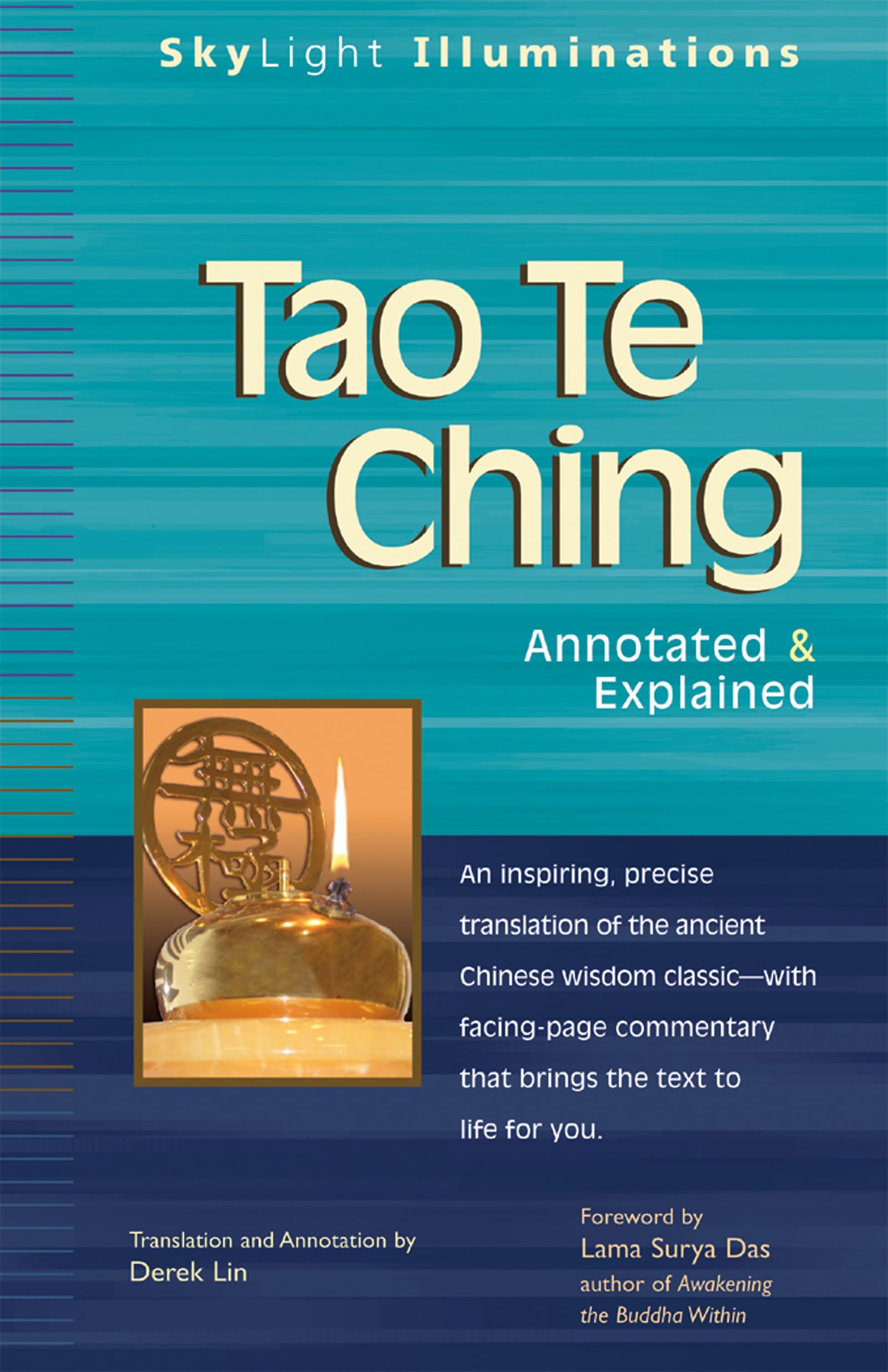
Tao Te Ching: Annotated & Explained (SkyLight Illuminations) [Lao Tzu, Derek Lin, Lama Surya Das] on desertcart.com. *FREE* shipping on qualifying offers. Tao Te Ching: Annotated & Explained (SkyLight Illuminations) Review: A superior translation of this powerful book - There is no rigorous peer review of Tao Te Ching translations. In this translation, every Chinese character is linked to an English word or phrase. It is translated by Derek Lin. When read side by side with other translations, you might feel you're reading two different books altogether. The translations of this wonderful book vary greatly. The need to keep as close to the original as possible and, at the same time, make it easy to read and understand the meaning is a difficult need to fulfill. But this translation does a great job. Eastern sacred texts, like eastern thought, is the polar opposite of western thought. The Chinese think of the individual only in relation to the collective. In the west, we tend to think of the individual as more important. Indeed, that's the basis on which America was founded. So, it's hard for many westerners to understand, much less apply, the Tao (pronounced DOW) in their own lives. There are parts of it that I simply can't come to grips with myself. Note: In each passage I quote, I'll give you the translation from the translation by Gia-Fu Feng and Jane English first, followed by the Lin translation. Be aware that the latter has full annotations and explanations on the facing page. The former does not. One such passage that bothers me is: The Tao of heaven is to take from those who have too much and give to those who do not have enough. Man's way is different. He takes from those who do not have enough and give to those who already have too much. What man has more than enough and gives it to the world? Only the man of Tao. Therefore the sage works without recognition. He achieves what has to be done without dwelling on it. He does not try to show his knowledge. =================== The Tao of Heaven Is like drawing a bow Lower that which is high Raise that which is low Reduce that which has excess Add to that which has deficiency The Tao of Heaven Reduces the excessive And adds to the deficient The Tao of people is not so Reducing the deficient In order to offer to the excessive Who can offer their excess to the world? Only those who have the Tao Therefore, sages act without conceit Achieve without claiming credit They do not wish to display their virtue. This translation says the art of archery is a metaphor for "hitting the target in life." Moreover, this translation does not put the socialist emphasis on the text but translates it into a more pleasing way and one with which I can agree and understand --- that makes more sense to me. The actual text reads less well. But the commentary makes more sense and helps me to understand the true meaning. This is why I value this translation. Now, my problem with this passage in the Jane English translation is that it is socialist and I'm a capitalist. It reads like Marx. But, we must understand the Chinese come from a different place in their thinking. While I can't adopt this passage in my own life, I value it for its representation of the time and place of Lao Tzu. On the other hand, there are other passages that speak to me and help me. For example: (From the Jane English translation) Those who know do not talk. Those who talk do not know. Keep your mouth closed. Guard your senses. Temper your sharpness. Simplify your problems. Mask your brightness. Be at one with the dust of the Earth. This is primal union. He who has achieved this state Is unconcerned with friends and enemies, With good and harm, with honor and disgrace. This therefore is the highest state of man. The above passage makes sense to me. It has a libertarian tone and it appeals to my own belief system of listening more than talking, absorbing information and knowledge rather than providing it to others. We learn from listening, not talking. When we speak, we regurgitate our own thoughts. When we listen, we garner new information and knowledge. The above passage is from the Jane English translation. Now for the Derek Lin translation. Those who know do not talk Those who talk do not know Close the mouth Shut the doors Blunt the sharpness Unravel the knots Dim the glare Mix the dust This is called Mystic Oneness They cannot obtain this and be closer They cannot obtain this and be distant They cannot obtain this and be benefited They cannot obtain this and be harmed They cannot obtain this and be valued They cannot obtain this and be degraded Therefore, they become honored the world. This translation tells us the "dust" is a metaphor for the material world. Sharpness refers to the sharp edge of arrogance. It carefully explains each sentence and makes it clear. The Tao Te Ching is hard to understand in some places and in some translations. I read this lovely translation daily. It's nnotated and explained. This is a beautiful translation of this extraordinary masterpiece and I recommend it highly. - Susanna K. Hutcheson Review: An outstanding translation - with clear annotations - Derek Lin has performed an outstanding job of helping the Tao to reach out reportedly from a sage Lao Tzu about 2,500 years ago, to the present and still resonate clearly. While the online text found here is missing the annotations that are integral in understanding the translation in today's terms it can be very useful and helpful in that it provides a glimpse for comparison purposes http://www.dereklin.com/Tao-Te-Ching Of the ten translations have been reading, I find this to be easiest to follow. Where a meaning differs from some the other translation, in the annotations he explains why. In looking at some other translations, sometimes I find that the translation appears to be tinted somewhat by the color of the thoughts of the interpreter. Some of the other translations have been reading: John Bright-Fey Tao Te Ching: An Authentic Taoist Translation , The Whole Heart of Tao (The Whole Heart series) ; Stephen Addis & Stanley Lombardo Tao Te Ching by Lao-Tzu, Addiss, Stephen, Lombardo, Stanley, Watson, Burton copyright 1993 Edition [Paperback(1993) ]; Dennis Waller Tao Te Ching- Lao Tzu, A Translation ; Witter Bynner The Way of Life, According to Laotzu ; Ron Hogan; JH McDonald; Jane English & Gia Fu-Feng Perhaps looking here will be helpful as well: http://www.duhtao.com/sidebyside.html I found that Alan Watts with Al Chung-liang Huang writing in Tao: The Watercourse Way to be informative. So was Thomas Merton's book The Way of Chuang Tzu (Second Edition)
| Best Sellers Rank | #105,814 in Books ( See Top 100 in Books ) #23 in Tao Te Ching (Books) #27 in Taoism (Books) #40 in Taoist Philosophy |
| Customer Reviews | 4.8 4.8 out of 5 stars (775) |
| Dimensions | 5.5 x 0.52 x 8.5 inches |
| Edition | 1st |
| ISBN-10 | 1594732043 |
| ISBN-13 | 978-1594732041 |
| Item Weight | 2.31 pounds |
| Language | English |
| Part of series | SkyLight Illuminations |
| Print length | 208 pages |
| Publication date | August 1, 2006 |
| Publisher | SkyLight Paths |
A**M
A superior translation of this powerful book
There is no rigorous peer review of Tao Te Ching translations. In this translation, every Chinese character is linked to an English word or phrase. It is translated by Derek Lin. When read side by side with other translations, you might feel you're reading two different books altogether. The translations of this wonderful book vary greatly. The need to keep as close to the original as possible and, at the same time, make it easy to read and understand the meaning is a difficult need to fulfill. But this translation does a great job. Eastern sacred texts, like eastern thought, is the polar opposite of western thought. The Chinese think of the individual only in relation to the collective. In the west, we tend to think of the individual as more important. Indeed, that's the basis on which America was founded. So, it's hard for many westerners to understand, much less apply, the Tao (pronounced DOW) in their own lives. There are parts of it that I simply can't come to grips with myself. Note: In each passage I quote, I'll give you the translation from the translation by Gia-Fu Feng and Jane English first, followed by the Lin translation. Be aware that the latter has full annotations and explanations on the facing page. The former does not. One such passage that bothers me is: The Tao of heaven is to take from those who have too much and give to those who do not have enough. Man's way is different. He takes from those who do not have enough and give to those who already have too much. What man has more than enough and gives it to the world? Only the man of Tao. Therefore the sage works without recognition. He achieves what has to be done without dwelling on it. He does not try to show his knowledge. =================== The Tao of Heaven Is like drawing a bow Lower that which is high Raise that which is low Reduce that which has excess Add to that which has deficiency The Tao of Heaven Reduces the excessive And adds to the deficient The Tao of people is not so Reducing the deficient In order to offer to the excessive Who can offer their excess to the world? Only those who have the Tao Therefore, sages act without conceit Achieve without claiming credit They do not wish to display their virtue. This translation says the art of archery is a metaphor for "hitting the target in life." Moreover, this translation does not put the socialist emphasis on the text but translates it into a more pleasing way and one with which I can agree and understand --- that makes more sense to me. The actual text reads less well. But the commentary makes more sense and helps me to understand the true meaning. This is why I value this translation. Now, my problem with this passage in the Jane English translation is that it is socialist and I'm a capitalist. It reads like Marx. But, we must understand the Chinese come from a different place in their thinking. While I can't adopt this passage in my own life, I value it for its representation of the time and place of Lao Tzu. On the other hand, there are other passages that speak to me and help me. For example: (From the Jane English translation) Those who know do not talk. Those who talk do not know. Keep your mouth closed. Guard your senses. Temper your sharpness. Simplify your problems. Mask your brightness. Be at one with the dust of the Earth. This is primal union. He who has achieved this state Is unconcerned with friends and enemies, With good and harm, with honor and disgrace. This therefore is the highest state of man. The above passage makes sense to me. It has a libertarian tone and it appeals to my own belief system of listening more than talking, absorbing information and knowledge rather than providing it to others. We learn from listening, not talking. When we speak, we regurgitate our own thoughts. When we listen, we garner new information and knowledge. The above passage is from the Jane English translation. Now for the Derek Lin translation. Those who know do not talk Those who talk do not know Close the mouth Shut the doors Blunt the sharpness Unravel the knots Dim the glare Mix the dust This is called Mystic Oneness They cannot obtain this and be closer They cannot obtain this and be distant They cannot obtain this and be benefited They cannot obtain this and be harmed They cannot obtain this and be valued They cannot obtain this and be degraded Therefore, they become honored the world. This translation tells us the "dust" is a metaphor for the material world. Sharpness refers to the sharp edge of arrogance. It carefully explains each sentence and makes it clear. The Tao Te Ching is hard to understand in some places and in some translations. I read this lovely translation daily. It's nnotated and explained. This is a beautiful translation of this extraordinary masterpiece and I recommend it highly. - Susanna K. Hutcheson
D**E
An outstanding translation - with clear annotations
Derek Lin has performed an outstanding job of helping the Tao to reach out reportedly from a sage Lao Tzu about 2,500 years ago, to the present and still resonate clearly. While the online text found here is missing the annotations that are integral in understanding the translation in today's terms it can be very useful and helpful in that it provides a glimpse for comparison purposes http://www.dereklin.com/Tao-Te-Ching Of the ten translations have been reading, I find this to be easiest to follow. Where a meaning differs from some the other translation, in the annotations he explains why. In looking at some other translations, sometimes I find that the translation appears to be tinted somewhat by the color of the thoughts of the interpreter. Some of the other translations have been reading: John Bright-Fey Tao Te Ching: An Authentic Taoist Translation , The Whole Heart of Tao (The Whole Heart series) ; Stephen Addis & Stanley Lombardo Tao Te Ching by Lao-Tzu, Addiss, Stephen, Lombardo, Stanley, Watson, Burton copyright 1993 Edition [Paperback(1993) ]; Dennis Waller Tao Te Ching- Lao Tzu, A Translation ; Witter Bynner The Way of Life, According to Laotzu ; Ron Hogan; JH McDonald; Jane English & Gia Fu-Feng Perhaps looking here will be helpful as well: http://www.duhtao.com/sidebyside.html I found that Alan Watts with Al Chung-liang Huang writing in Tao: The Watercourse Way to be informative. So was Thomas Merton's book The Way of Chuang Tzu (Second Edition)
A**R
Helpful annotations
I found the annotations helpful and really enjoyed this translation.
D**Y
Ancient guidance for modern minds
This edition of the Tao te Ching pairs the translator’s detailed notes on the left page with the verses—or “teachings”—on the right. I often read the right page first, then the translation, then returned to the right page again. The verses feel very much like proverbs—short, poetic reflections full of wisdom and open to interpretation. While “teachings” is a common label, the text seems less like strict doctrine and more like timeless guidance that encourages contemplation rather than rigid belief. I appreciated the translator’s effort to stay close to the original meaning, especially compared to other versions that use vaguer language and lose nuance. However, I did wish for more background context to better understand Taoism’s deeper concepts and cultural roots. Overall, this version is a thoughtful and engaging read that inspired me to keep exploring the Tao and revisit the text with fresh eyes
V**R
Easy read
Great start to the Tao, easy read and simple terms for those starting out or interested in information
S**I
I own a modest library dedicated to Taoism, consisting of about a hundred volumes, including canonical texts, historical texts, and essays (obviously in Italian, my native language). Taken together, they are worth as much as one of Master Lin's works; one of the greatest blessings of my life was being able to go beyond the publication of his volumes in English, using online translators where necessary. Believe me, if you want to understand the Tao firsthand, you absolutely must approach the Master's work; I'm not exaggerating when I say that you'll almost feel like you're conversing with Lao Tzu personally. It's incredible to find works of this depth, yet written so comprehensibly. Give yourself the greatest gift of your life; you'll literally fall in love with his words. Possiedo una modesta libreria dedicata al Taoismo, composta da circa un centinaio di volumi tra testi canonici, storici e saggi (ovviamente in italiano, mia lingua madre). Messi tutti insieme, valgono come 1 sola delle opere del Maestro Lin; una delle più grandi fortune della mia vita è stata riuscire ad andare oltre alla pubblicazione in lingua inglese dei suoi volumi, aiutandomi ove necessario con qualche traduttore on line. Credetemi, se volete comprendere il Tao "di prima mano", dovete per forza approcciare il lavoro del Maestro; non esagero, se dico che vi sembrerà quasi di star conversando con Lao Tzu personalmente. Incredibile trovare delle opere di questa profondità, eppure scritte in modo tanto comprensibile. Fatevi il regalo più bello della vostra vita, vi innamorerete letteralmente delle sue parole.
R**D
Excellent book A must for all spritualists
P**E
Probably the best version of the Tao Te Ching, written by someone who devoted his life the teachings of this book. A must have!
W**A
now there is a translation that make sense. And you can taste the diference from the translation and interpretation, thats normaly mixed up... but this book make a clean diference from: - What is writed (in the tae te ching) - What i think it means (autor opnion os meaning in the comments) Some times you agree, some times not... but knowing the original meaning, makes all the diference in the world.
C**5
This is my first Tao Te Ching I finished reading. I feel like I understood more. I also read other scriptures ( Bhagavad-Gita, upanishad...) , I felt I was ready to read Tao Te Ching. This book was recommended by my partner and pleased I read. It's not intellectually translated, I can see the author has his own deep understanding of Taoism and own practice. Since then, I feel more confident enough to read other translations. Thanks to Derek Lin for superb work he does.
Trustpilot
2 weeks ago
2 months ago